Deck Maintenance in North Carolina: The Seasonal Guide
June 23, 2026 · 5 min read · FrameCraft crew
North Carolina is a tough climate for decks: humid summers, heavy spring pollen, strong UV, and just enough winter to matter. A few hours of maintenance a year prevents most of the repairs we get called for. Here's the calendar we give our own clients.
Spring: wash and inspect
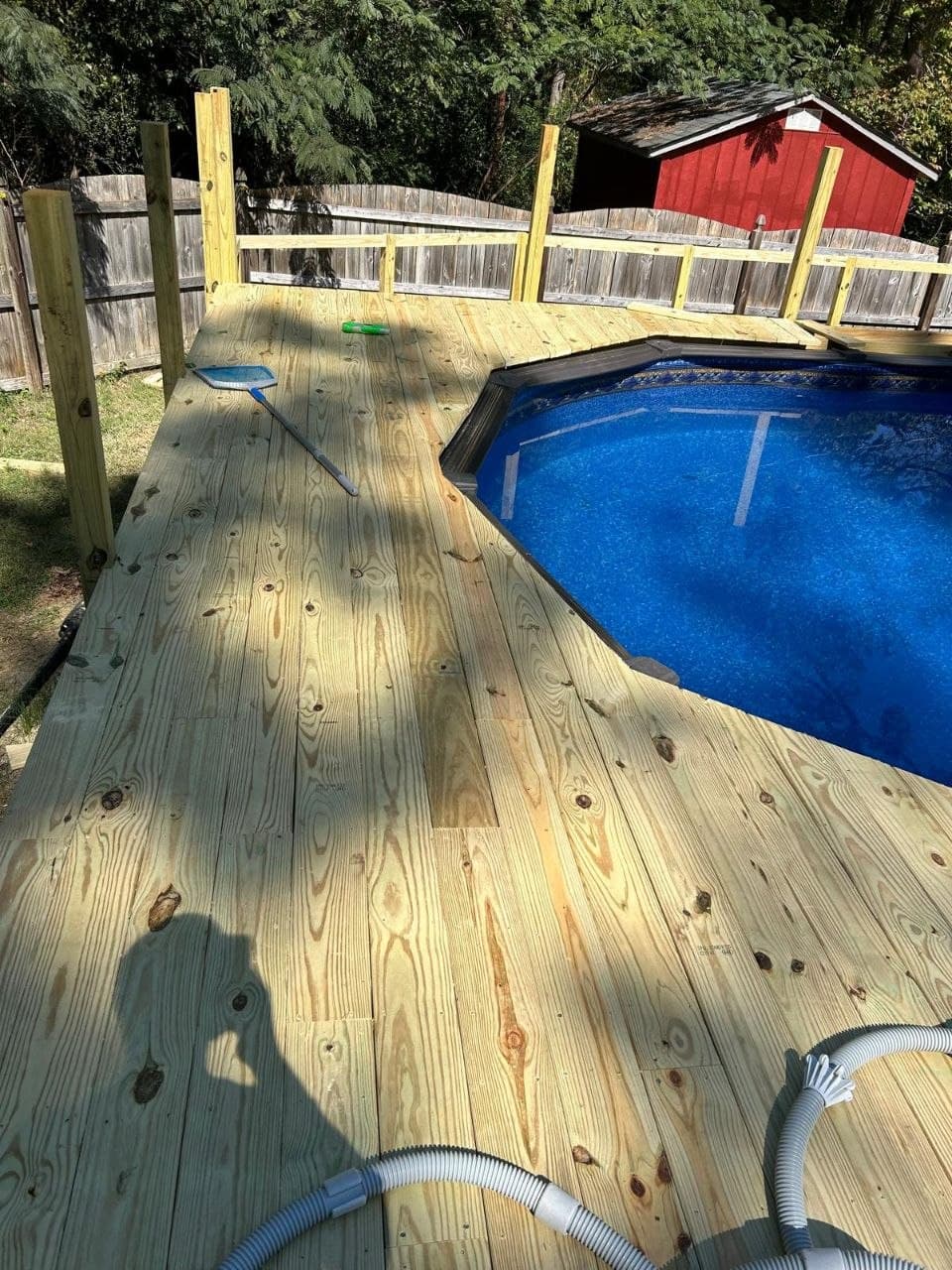
Wash off the pollen layer — soap and water or a low-pressure rinse. High-pressure washing tears up wood fibers; keep the wand moving and at distance.
Walk the deck barefoot (carefully): you'll feel soft spots and raised fasteners before you see them.
Check railings for wobble and stairs for movement after winter freeze-thaw.
Summer: shade and stain check
Splash a cup of water on a wood deck. If it beads, your sealer is working; if it soaks in flat, plan to stain or seal in early fall. Composite owners: this is your season off — enjoy it.
Fall: the best time to stain
Cooler temps and lower humidity make September-October the ideal staining window in the Charlotte area. Clean first, let the wood dry two to three days, then apply a quality semi-transparent stain. Clear leaves off the deck through the season — wet leaf piles are how mildew stains and rot start.
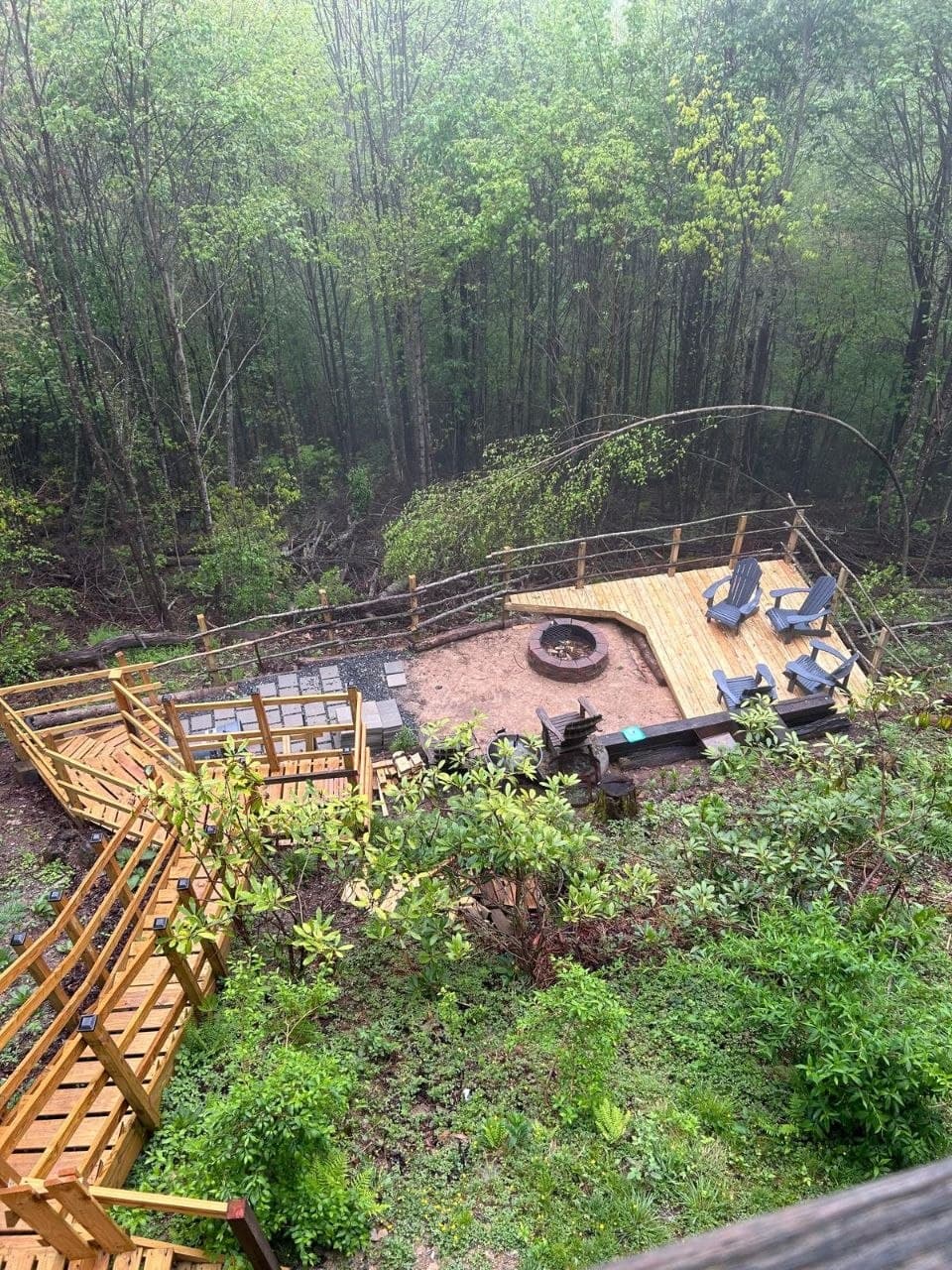
Wooded lots mean leaves — keep them off the boards in fall.
Winter: small stuff
Use calcium chloride or sand on icy steps — rock salt is rough on fasteners and wood.
Shovel with a plastic blade, along the boards, not across.
A good winter project: map out that pergola or cover you want built by spring — builders' calendars fill fast once it warms up.
The every-few-years items
Every two to three years: re-stain (wood), and have the structure inspected — footings, ledger flashing, hardware. We do free inspections across the Charlotte area, and honest verdicts: most decks we look at need a $300 fix, not a $30,000 rebuild.
Planning a project in the Charlotte area?
We'll come out, measure, and give you an honest itemized estimate — free.